
Episode 3
What We Learned From Our First Published Projects (And What We’d Do Differently)
Nikki and Melissa get real about their very first published projects — the flops, the lessons, and the marketing mistakes that changed everything. Tune in for honest, practical advice every new author and illustrator needs to hear
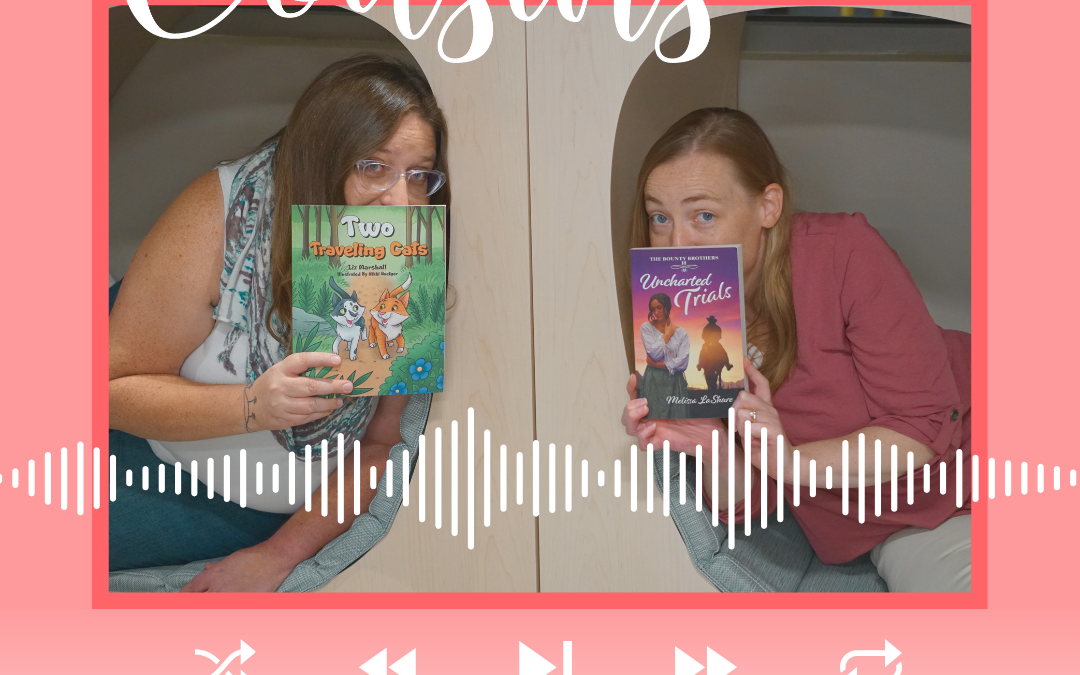
Hosts
Nikki Boetger- Illustrator
Melissa LaShure – Author
About This Episide
What We Learned From Our First Published Projects (And What We’d Do Differently)
Every author and illustrator has a first project. And if they’re being honest with you — it probably didn’t go the way they planned.
In Episode 3 of the Publishing Cousins podcast, Nikki Boetger and Melissa sit down to share the real stories behind their very first published books. No glossing over the hard parts. No pretending it was all smooth sailing. Just two creatives being refreshingly honest about the flops, the lessons, and the unexpected gifts that came from starting somewhere imperfect.
Melissa’s First Book: Love’s Fairy Tale
Melissa’s debut novel, Love’s Fairy Tale, was a young adult story she rushed to finish before her grandfather passed away from cancer. He never got to see it published, but he did get to hear the first draft read aloud — a moment she still treasures. But the book itself? She’ll tell you it’s not her best work.
She wrote it without a critique group. Without developmental editing. Without the marketing knowledge she has today. And when it landed on Amazon, she had the classic first-timer expectation: the publisher will handle marketing, readers will find it, and the copies will sell themselves.
They didn’t.
The book was pulled from Amazon before long, and Melissa was left with a hard truth: no one was coming to save her launch. That experience became the catalyst for everything she’s built since — her writers group, Literary Scape, and a deep commitment to helping other writers avoid the same potholes.
Nikki’s First Book: What’s Wrong with Mud?
Nikki’s path to her first published book started with a contest. Illustrators were matched with authors, given a manuscript snippet, and asked to illustrate a single page. Nikki won — and with that win came an assignment to illustrate a full picture book about a duck and a pig who trade places for a day.
She chose cut paper as her medium. It was fun. She loved building layers and dimension with her hands. And now, looking back at the pages of What’s Wrong with Mud?, she cringes a little.
But the real learning came after the book was printed. Five hundred copies arrived on a semi-truck — more physical product than she’d bargained for. She rented booth space at a local festival all about pigs, thinking it was a perfect match. She sold two books over three days. The booth space wasn’t even covered.
Social media was barely a concept. Facebook was brand new. Instagram didn’t exist. Community-building online hadn’t taken off yet. And without those tools, selling books was a very different (and much harder) game.
What They’d Tell Their First-Time Selves
Between the two of them, Nikki and Melissa pull out some of the most practical publishing advice you’ll hear — not from a textbook, but from the school of hard knocks:
- Invest in editing. Developmental editing, copy editing, line editing, and proofreading are not luxuries — they’re necessities. Three separate editors means three sets of eyes catching what yours will always miss.
- Find your genre before you publish. Melissa discovered that young adult wasn’t really her genre by publishing in it. Now she writes adult Christian historical romance — and loves it. Know yourself as a reader, and that clarity will follow you as a writer.
- Join a critique group. Your manuscript will only get stronger with honest feedback from fellow writers who are invested in the craft.
- Marketing is your job, not your publisher’s. Whether you’re self-publishing or traditionally published, no one will champion your book the way you will. Learning the basics of email marketing, social media, and audience-building is non-negotiable.
- Give yourself a realistic timeline. Publishing is a long game. A five-year plan isn’t pessimism — it’s wisdom.
- Donate with intention. Nikki was able to donate many of her unsold copies to an organization that provided books to children with long hospital stays. Sometimes a book finds its purpose in an unexpected way.
|
“Your first piece should be the push you need to go, ‘Okay, that was crap — but I want to do better. How do I do better?'” — Nikki Boetger, Publishing Cousins Ep. 3 |
The Bottom Line
No one’s first published project is their masterpiece. And that’s exactly as it should be. The point of starting isn’t to be perfect — it’s to learn, connect, grow, and keep going.
If you’re an aspiring author or illustrator sitting on a manuscript or a portfolio and waiting until it’s “ready,” this episode is your invitation to move forward anyway. Learn from Nikki and Melissa’s missteps so you don’t have to make all of them yourself.
Links:
Related Episodes
Episode 12: How to Avoid Creative Burnout: Work-Life Balance Tips for Authors and Illustrators
Episode 12 How to Avoid Creative Burnout: Work-Life Balance Tips for Authors and IllustratorsIn Episode 12, Melissa and Nikki share their personal strategies for keeping the balance — from time blocking and batch working to building a community that keeps your...
Episode 11: How to Market Yourself as an Author or Illustrator
Author marketing made simple. Discover your color palette, craft a one-line pitch, and sell your books or illustrations with authentic confidence. Publishing Cousins Ep. 11.
Episode 10: How Authors and Illustrators Can Build a Website and Grow an Email Newsletter
Learn how authors and illustrators can build a website, grow an email newsletter, and use AI tools to market their books. Episode 10 of the Publishing Cousins podcast.
0 Comments